

Introduction: Why Application Virtualization Has Replaced Full VDI for Many Use Cases
By 2026, many enterprises have reconsidered whether full Virtual Desktop Infrastructure is necessary for every user. In a growing number of scenarios, application virtualization—delivering individual applications rather than entire desktops—has become the preferred model.
This shift is driven by several factors:
- Reduced operational overhead
- Smaller attack surface
- Better user experience for task-focused roles
- Easier scalability for specific workloads
As a result, Virtual Apps and Desktops (VAD) strategies increasingly favor Virtual Apps over full desktops. In this context, the differentiator is no longer application streaming alone, but how easily application delivery workflows can be automated, governed, and operated at scale.
This article examines Cloud Application Virtualization in 2026, comparing Thinfinity Virtual Apps with Thinfinity Cloud Manager, Azure Virtual Desktop (RemoteApps), and Amazon AppStream 2.0, focusing on automation, operational simplicity, and control.
Application Virtualization in Practice: What Enterprises Actually Need
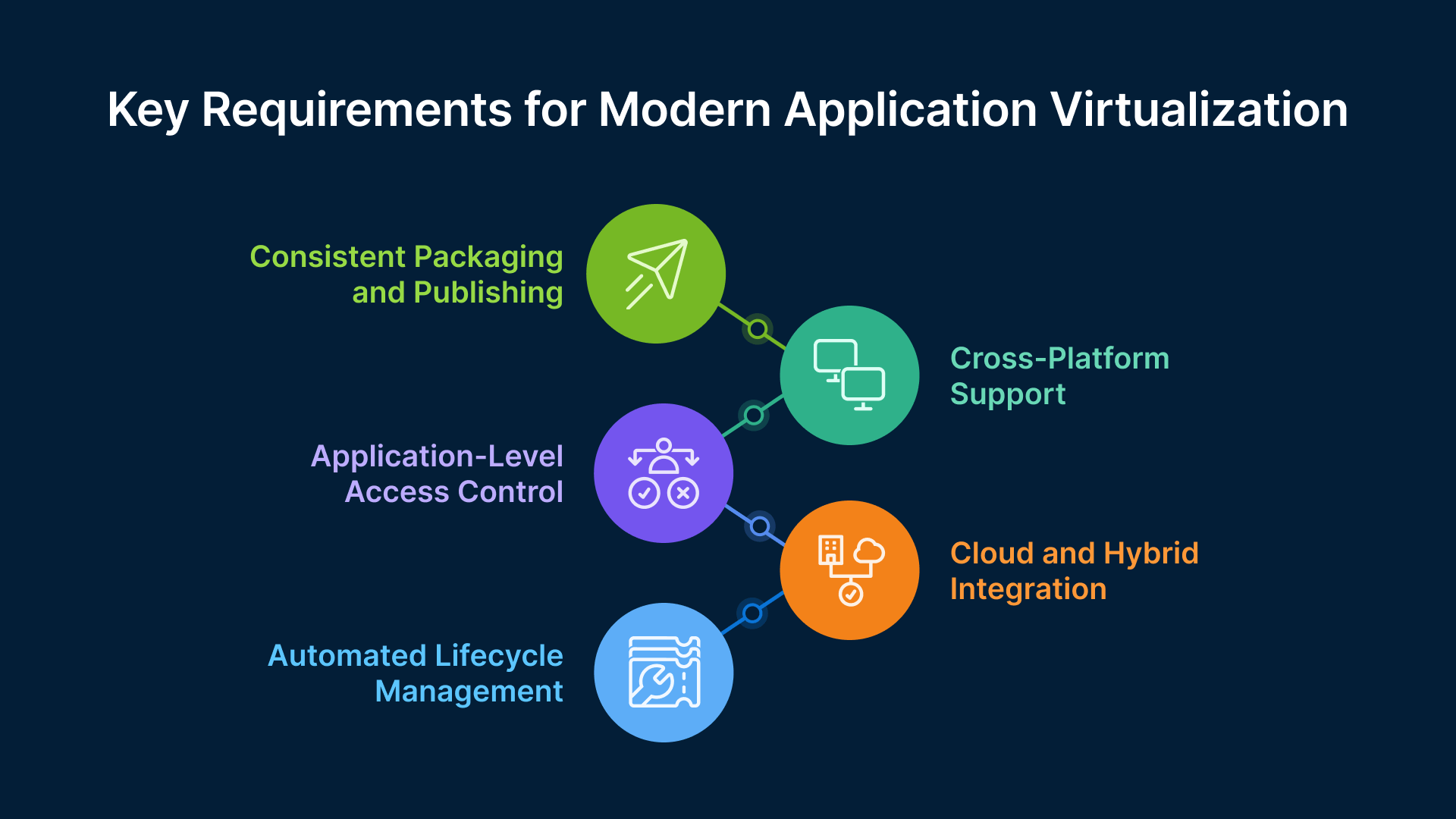
Modern application virtualization platforms are expected to do more than publish applications. Enterprises expect them to:
- Package and publish applications consistently
- Control access at the application level
- Automate lifecycle management
- Support Windows and Linux applications
- Integrate cleanly into cloud and hybrid environments
The challenge is not application delivery itself, but how fragmented or centralized the operational model is.
Azure Virtual Desktop RemoteApps: Powerful, but Infrastructure-Centric
Azure Virtual Desktop supports application virtualization through RemoteApps, allowing organizations to publish individual applications hosted on session hosts.
From an automation standpoint, RemoteApps inherit the same characteristics as AVD overall. Application delivery workflows are tightly coupled to:
- Session host infrastructure
- Image management processes
- Identity and access policies
- Scaling and monitoring services
This makes RemoteApps flexible, but also infrastructure-centric. Automation typically spans Infrastructure as Code templates, image pipelines, and identity configurations, often managed by different teams.
In 2026, RemoteApps are effective for organizations already operating mature AVD environments, but application virtualization remains one part of a broader VDI stack, rather than a standalone operational model.
Amazon AppStream 2.0: Managed Application Streaming with Defined Boundaries
Amazon AppStream 2.0 is purpose-built for application streaming rather than desktops. It abstracts much of the underlying infrastructure and offers a managed service model optimized for publishing applications to users without exposing full desktops.
This abstraction simplifies deployment and reduces operational burden. However, it also constrains customization. Application packaging, scaling behavior, and access workflows must conform to the service’s predefined constructs.
From an automation perspective, AppStream emphasizes simplicity through constraint. It works well for standardized application delivery scenarios but becomes less adaptable when enterprises require:
- Complex access policies
- Hybrid deployments
- Fine-grained control over application lifecycles
Thinfinity Virtual Apps with Cloud Manager: Application-Centric Automation
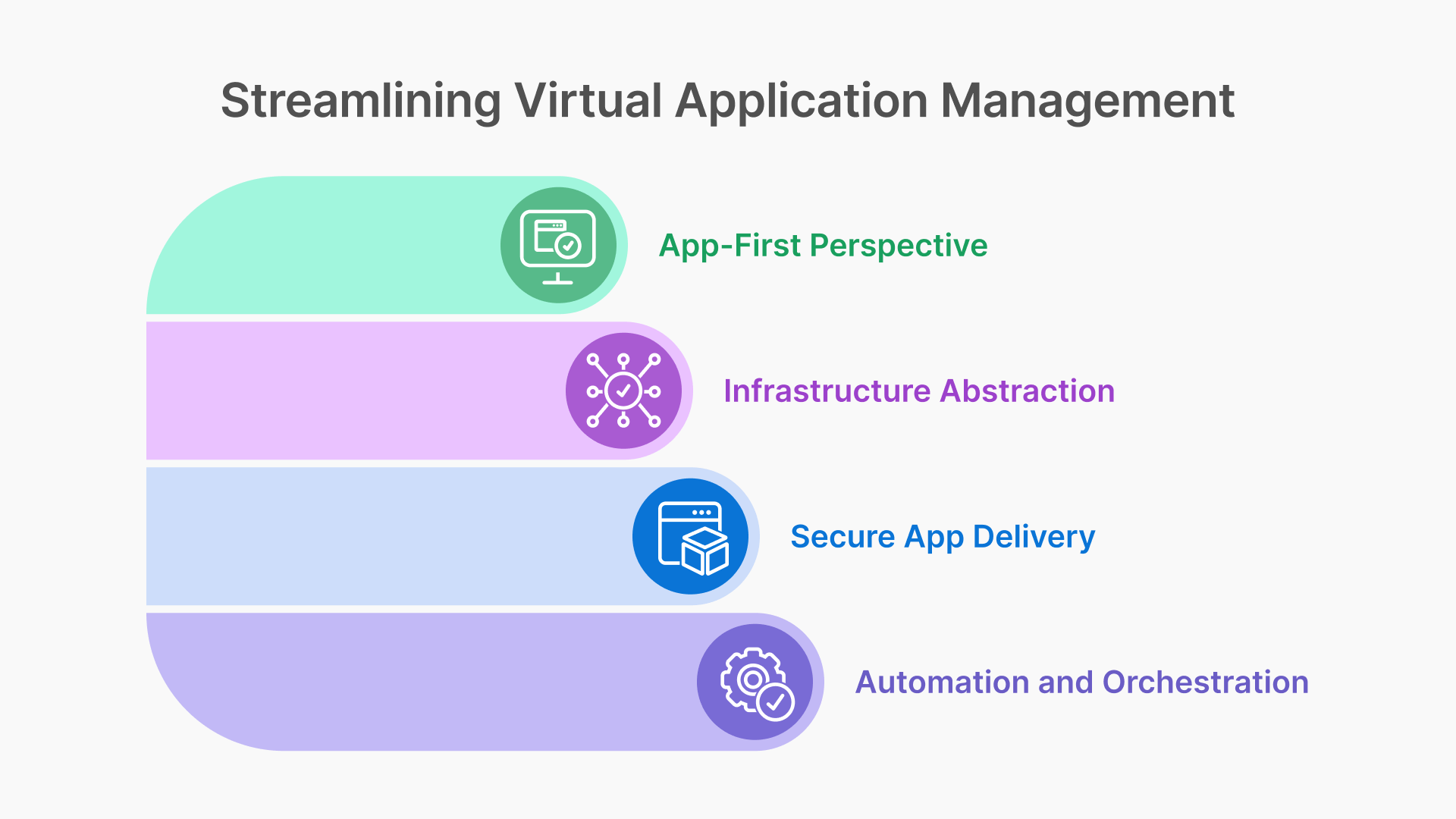
Thinfinity approaches application virtualization from an application-first perspective, rather than treating applications as a subset of desktop infrastructure.
Thinfinity Virtual Apps focuses on delivering individual Windows and Linux applications securely, while Thinfinity Cloud Manager provides the automation and orchestration layer that governs how those applications are published, assigned, and operated.
Instead of forcing administrators to manage infrastructure components directly, Cloud Manager abstracts Infrastructure as Code into application-centric workflows.
Rather than session hosts and infrastructure templates, this allows IT teams to think in terms of:
- Applications
- Users and roles
- Access policies
- Lifecycle events
Infrastructure Abstraction Without Losing Control
A critical distinction in application virtualization platforms is how infrastructure is abstracted.
- Azure Virtual Desktop exposes infrastructure and expects teams to automate around it
- Amazon AppStream hides infrastructure almost entirely
- Thinfinity Cloud Manager abstracts infrastructure without removing visibility or control
Cloud Manager relies on native cloud infrastructure (such as OCI) under the hood, but exposes it through higher-level constructs aligned with application delivery. Automation exists, but administrators do not need to design it from scratch.
This middle-ground approach is especially relevant in 2026, as application virtualization expands beyond simple use cases into core business workflows.
Single Pane of Glass for Virtual Apps Operations
One of the recurring operational challenges with application virtualization is fragmentation. Application publishing, access control, scaling, and monitoring often live in different consoles or tools.
Thinfinity Cloud Manager addresses this by acting as a single pane of glass for Virtual Apps operations. Application catalogs, user assignments, access rules, and lifecycle events are visible and manageable in one place.
Compared to Azure’s multi-console approach, this reduces operational complexity. Compared to AppStream’s managed abstraction, it offers significantly more flexibility and visibility.
Automation Across the Application Lifecycle
In 2026, application virtualization success depends on how well platforms automate the full lifecycle:
- Onboarding new applications
- Publishing updates
- Assigning access dynamically
- Retiring applications cleanly
Thinfinity Cloud Manager enables consistent automation across Windows and Linux Virtual Apps, using the same orchestration model regardless of where applications are hosted.
Azure Virtual Desktop RemoteApps can achieve similar outcomes but typically require multiple automation pipelines. Amazon AppStream simplifies lifecycle management but limits customization.
Operational Impact Over Time
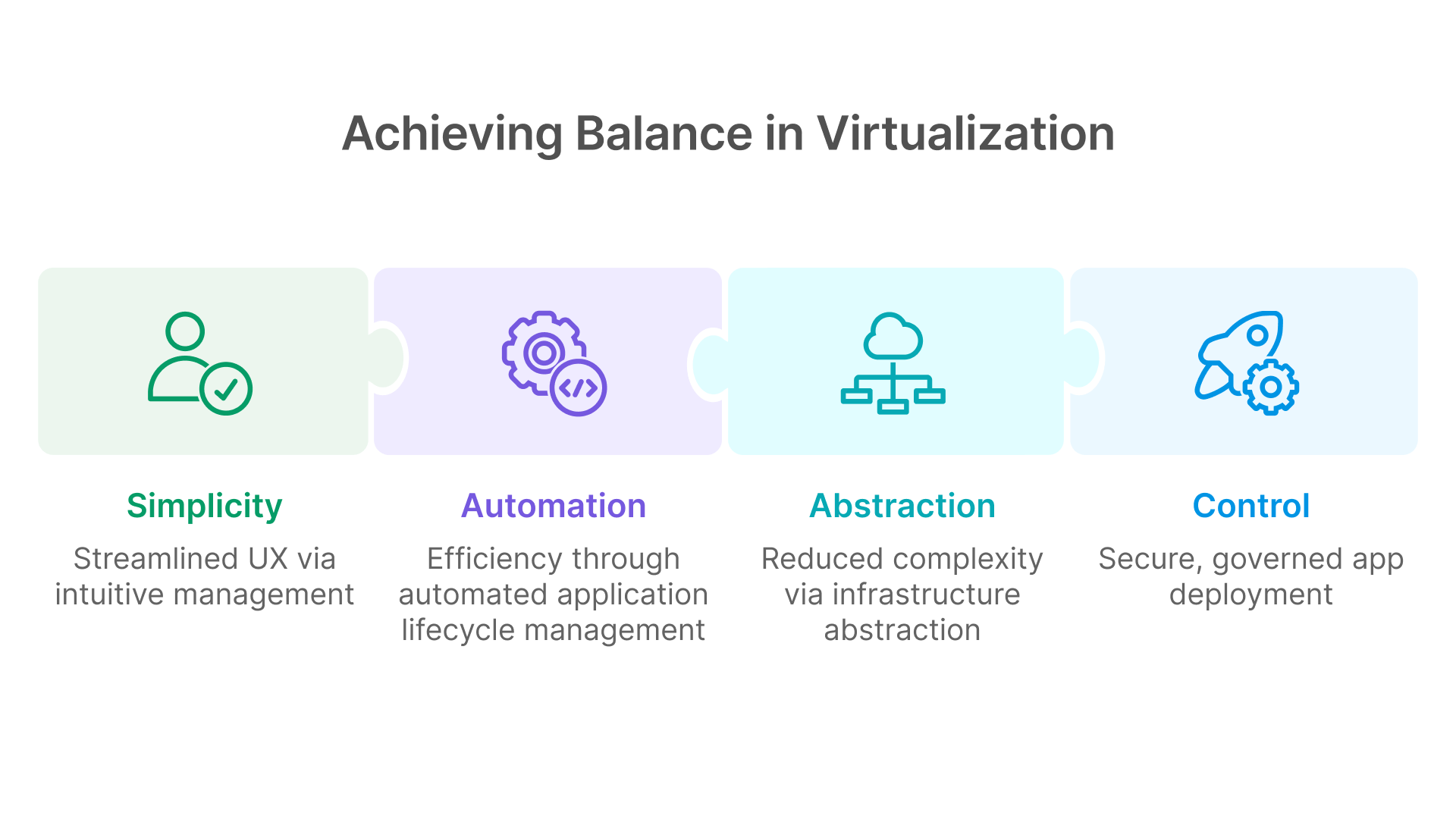
As application catalogs grow and user populations diversify, automation and clarity become increasingly important.
- Azure Virtual Desktop offers maximum flexibility but higher operational overhead
- Amazon AppStream offers simplicity but limited adaptability
- Thinfinity Virtual Apps with Cloud Manager aims to balance simplicity and control, enabling application-centric automation without overwhelming infrastructure complexity
This balance is particularly relevant for enterprises delivering internal line-of-business applications, legacy Windows apps, or mixed Windows and Linux application environments.
Conclusion: Application Virtualization as an Operating Model
In 2026, application virtualization is no longer a tactical alternative to VDI. It is a strategic operating model for delivering secure, scalable access to applications.
Azure Virtual Desktop RemoteApps, Amazon AppStream 2.0, and Thinfinity Virtual Apps represent three different philosophies:
- Infrastructure-centric integration
- Managed abstraction
- Application-centric automation
By abstracting Infrastructure as Code into a unified, application-aware control plane, Thinfinity Cloud Manager positions application virtualization as a manageable, repeatable service rather than an ongoing engineering effort.
For organizations seeking a solution that is simpler than Azure Virtual Desktop, yet more customizable than Amazon AppStream, this approach aligns well with the operational realities of Cloud Application Virtualization in 2026.