

Introduction: Why Cloud VDI Architecture Matters in 2026
By 2026, cloud-based Virtual Desktop Infrastructure (VDI) is no longer an emerging technology. Most enterprises have already adopted Cloud VDI in some form and are now facing the long-term implications of those architectural decisions.
Performance and basic usability are largely assumed. What now differentiates Cloud VDI platforms is architectural simplicity, operational control, and the ability to automate VDI workflows without excessive layering or hidden dependencies.
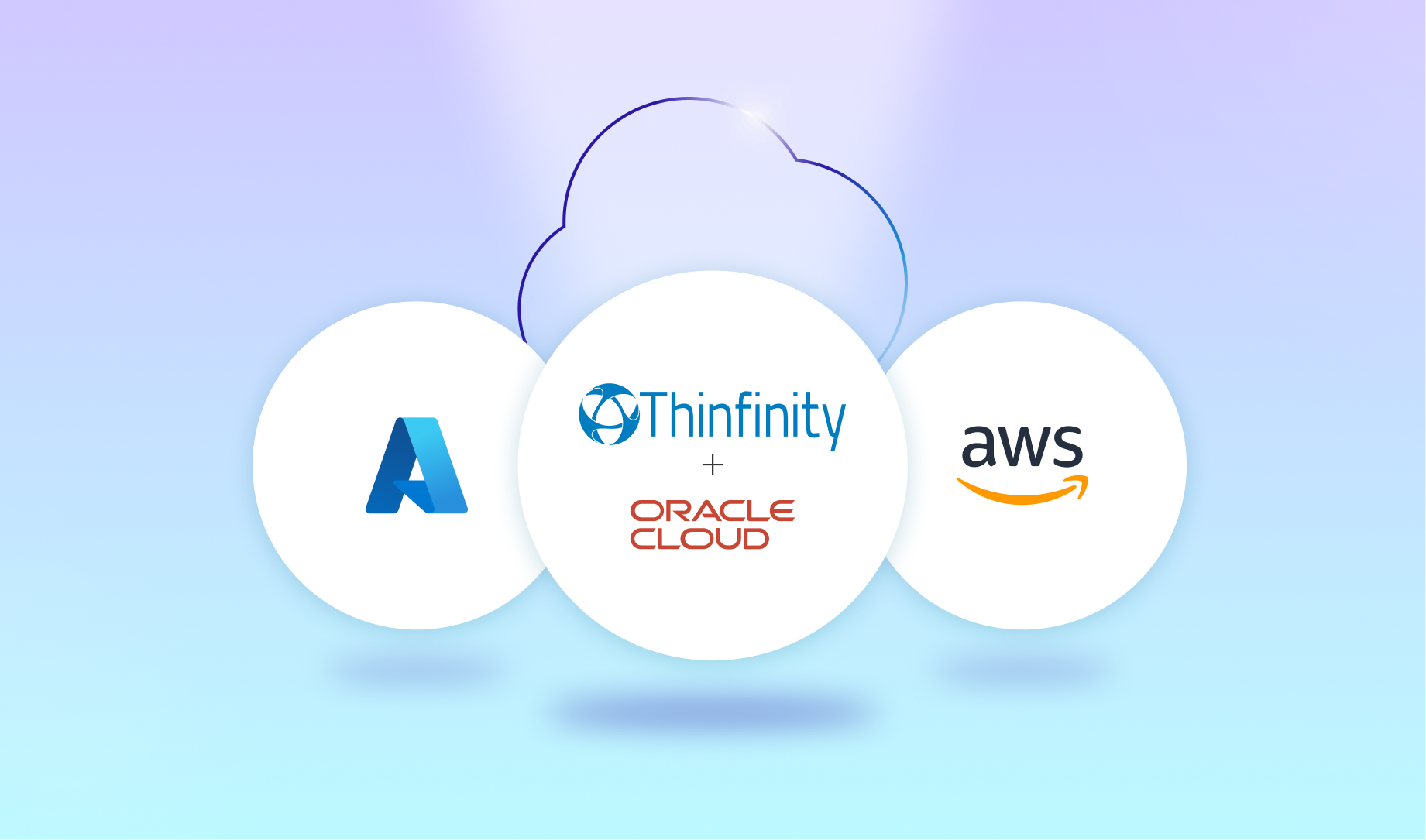
This pillar page compares Thinfinity VDI on Oracle Cloud Infrastructure (OCI), Azure Virtual Desktop (AVD), and Amazon WorkSpaces, focusing specifically on how Cloud VDI architectures behave over time for standard Windows and Linux VDI workloads.
From Traditional VDI to Cloud VDI: A Shift in Responsibility
Traditional on-prem VDI centralized control within a single stack. Cloud VDI distributes responsibility between the platform provider, the cloud infrastructure, and the customer.
Understanding where responsibility lives is essential when evaluating Cloud VDI platforms, especially as environments scale and automation becomes critical.
Architectural Layers: The Core Differentiator in Cloud VDI
Every Cloud VDI platform relies on infrastructure, but not all expose or abstract that infrastructure in the same way.
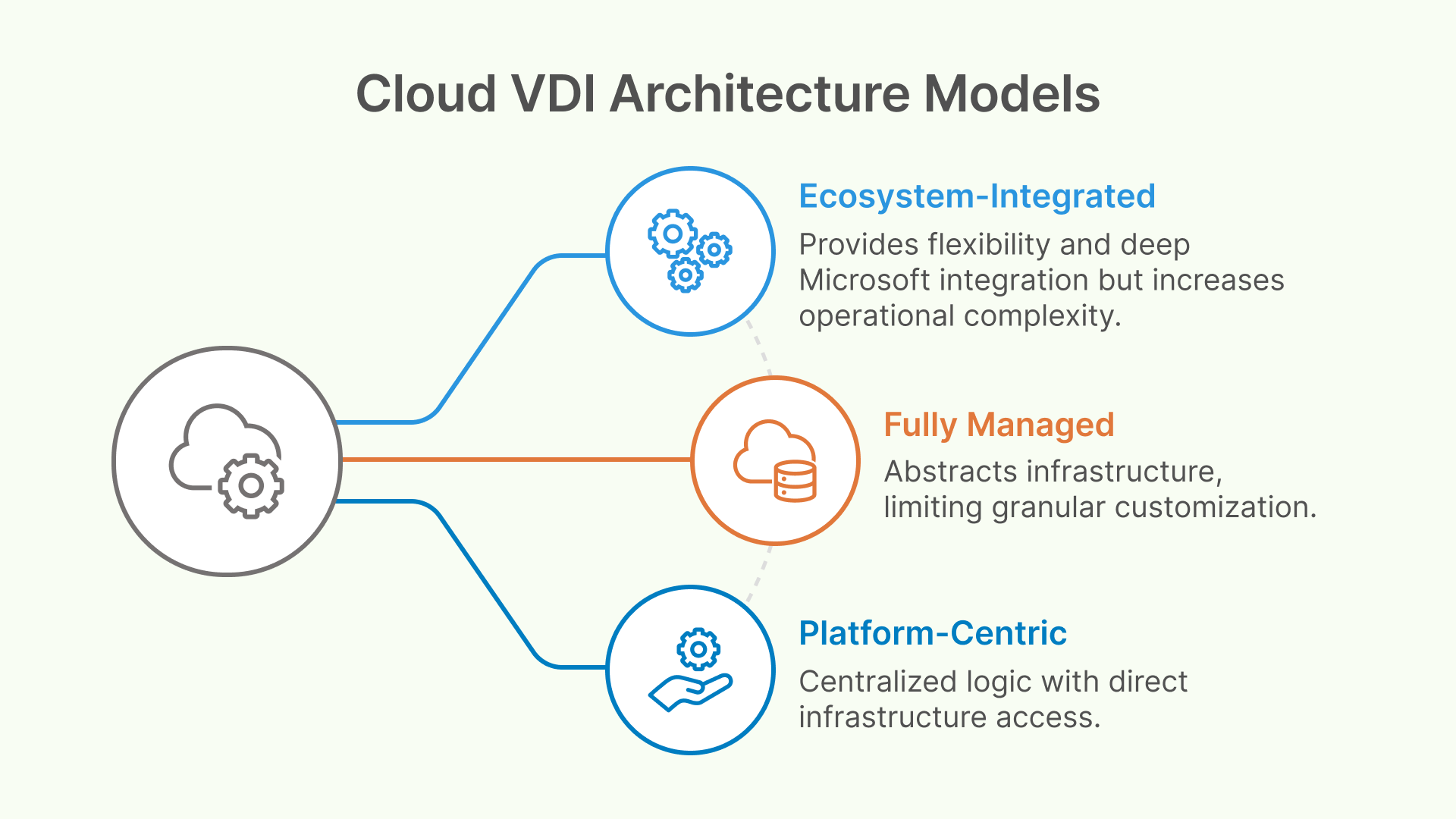
By 2026, Cloud VDI platforms generally fall into three architectural models, each with distinct operational implications.
Ecosystem-Integrated Cloud VDI
Azure Virtual Desktop Architecture
Azure Virtual Desktop is built from multiple Azure-native services working together, including identity, networking, compute, storage, monitoring, and security.
This design provides flexibility and deep Microsoft integration. However, VDI operations are spread across several control planes. Over time, this can increase operational complexity, especially when automating Windows and Linux desktop lifecycles.
Fully Managed Cloud VDI
Amazon WorkSpaces Architecture
Amazon WorkSpaces abstracts most architectural decisions behind a managed Desktop-as-a-Service model.
This approach reduces visible complexity and accelerates deployment. At the same time, it limits customization and granular control over desktop workflows, automation, and lifecycle management.
Platform-Centric Cloud VDI
Thinfinity on OCI Architecture
Thinfinity VDI on OCI follows a platform-centric architecture designed to minimize layers rather than abstract them.
The environment consists of only two components:
- Thinfinity as the VDI and access platform
- Native OCI services for compute, storage, and networking
There are no third-party brokers, gateways, or additional control planes. All Cloud VDI logic—including session brokering, desktop assignment, access control, and application delivery—is centralized within Thinfinity.
Cloud VDI for Windows and Linux Workloads
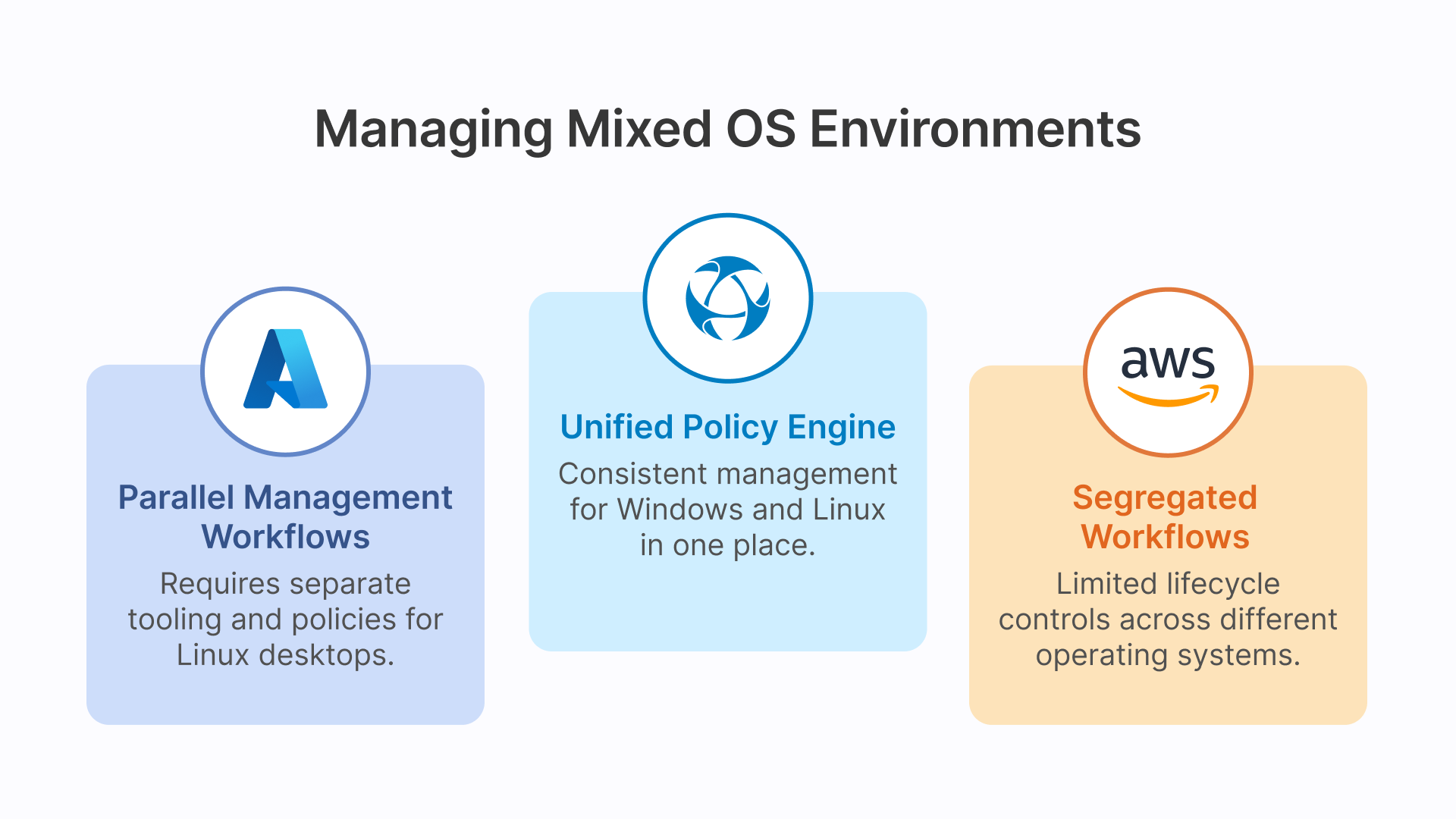
Modern enterprises rarely operate a single desktop type. Cloud VDI platforms must support Windows and Linux desktops with consistent policies and lifecycle controls.
Architectural differences directly affect core operational areas, including image management, user-to-desktop assignment, update workflows, and policy enforcement.
Centralized platforms tend to offer more consistent management across operating systems, while distributed architectures often require parallel workflows.
Granular Management and VDI Workflow Automation
In 2026, automation is a baseline expectation for Cloud VDI, not an advanced feature.
Where Automation Logic Lives
In Azure Virtual Desktop environments, automation often spans multiple Azure services and orchestration layers. In Amazon WorkSpaces, automation is largely predefined and limited.
Thinfinity places automation directly within the VDI platform itself. Desktop provisioning, assignment, access policies, and session lifecycle events can be defined and managed in a single control plane interacting directly with OCI infrastructure.
This centralized model simplifies both automation design and operational troubleshooting.
Operational Complexity Over Time
Architectural simplicity is rarely obvious during initial Cloud VDI deployment. It becomes clear as environments evolve.
Azure Virtual Desktop environments often require increasing governance and tooling to maintain consistency. Amazon WorkSpaces minimizes operational effort but restricts customization.
Thinfinity on OCI reduces dependency chains by limiting architectural layers, simplifying change management and troubleshooting over time.
High-Level Cloud VDI Architectural Comparison
Without focusing on features, the architectural positioning of each platform can be summarized as follows:
- Azure Virtual Desktop emphasizes ecosystem integration and flexibility
- Amazon WorkSpaces emphasizes managed simplicity and abstraction
- Thinfinity VDI on OCI emphasizes architectural clarity and centralized control
Conclusion: Choosing a Cloud VDI Architecture That Scales
By 2026, Cloud VDI success is determined less by vendor choice and more by architectural alignment with operational reality.
Azure Virtual Desktop, Amazon WorkSpaces, and Thinfinity VDI on OCI each reflect different assumptions about control, responsibility, and automation.
For organizations delivering standard Windows and Linux Cloud VDI workloads, understanding these architectural tradeoffs is essential to building an environment that remains manageable, automatable, and sustainable over time.